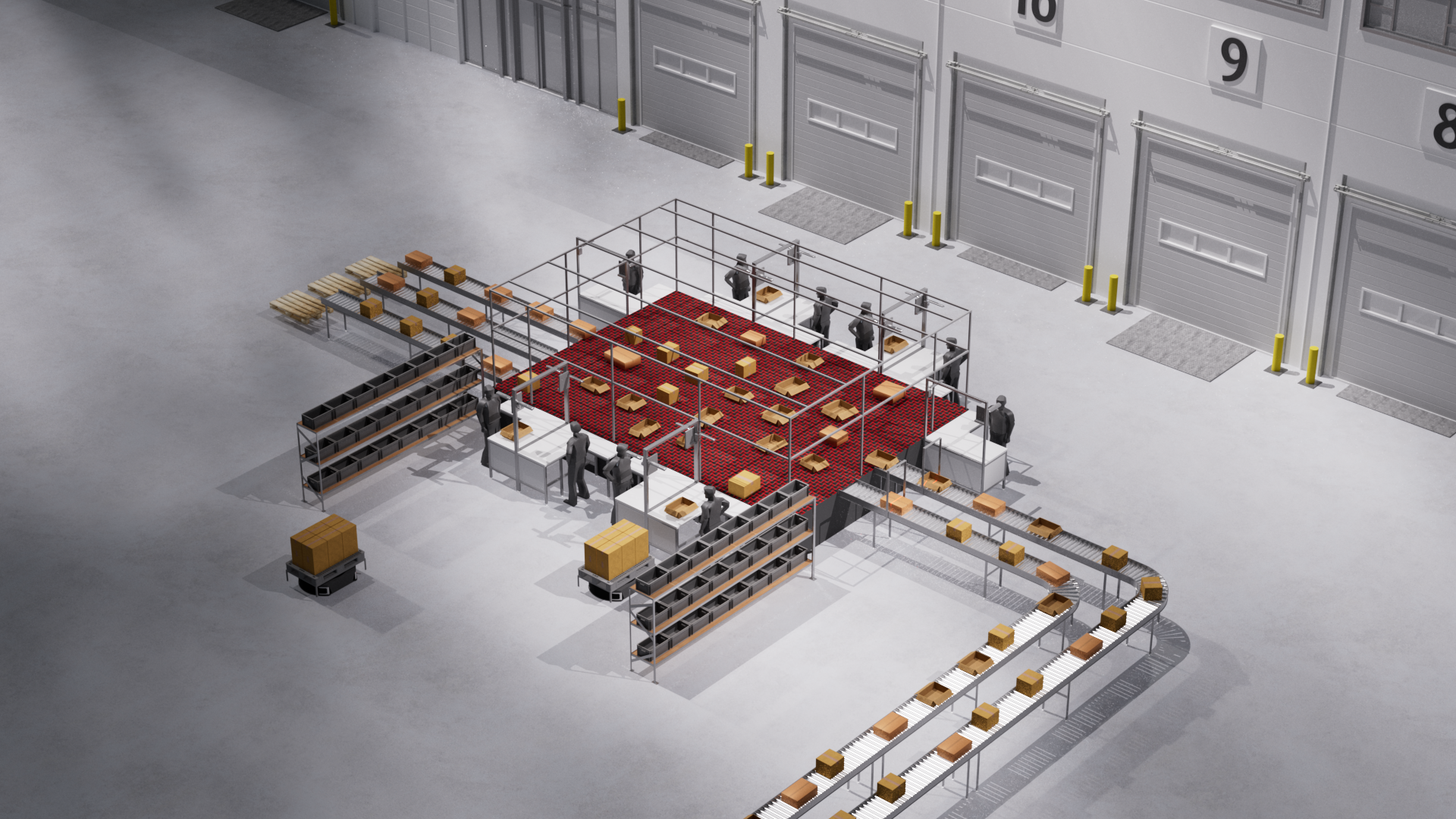
Value-adding tasks rely on manual handling at workstations, timing, and flow management
Goods reach a workstation, a human or robot adds the value, such as packing, labelling, inspection and quality control, and then the package flows onwards.
A well-running workstation operation lifts output per person, protects quality and keeps orders moving, but only when every item reaches the right station at the moment it is needed.
Rigid material flow automation adds supervision, interruption, and cleanup work
Value-adding work gets crowded out by manual fetching, timing, queueing and deviation handling.
Operators spend the shift managing flow, not doing the value-adding work
Conveyors move the goods but fix the route, so every change is a physical rebuild
Increased volume requires more headcount to not overwhelm operations
Autonomous VAS for order-fulfilment at Kitch'n
A 3×8 m system that fit a space-constrained site
The difference in day-to-day operations at our warehouse is that employees have gotten a renewed sense of purpose. They see us investing in new technology. There’s less physical strain, a better working environment, and reduced sick leave
Tor Harald Sel, Site Manager Kitch'n Bryne
.jpeg)
How autonomous goods-to-person for workstations changes your operations
Volume scales without adding people
With AI-driven autonomous flow, operators only touch value-adding work, at one height and with no fetching and lifting between levels, and operations can scale with a reduced need for scaling headcount.
Change without rebuild
Flow changes are software configurations and changing capabilities is just a wireless software update.
Every parcel seen, understood and controlled
Individual identification and routing give full order traceability, and the operating data the models improve on with every deployment.
Fewer workstations and a minimal footprint
The autonomous system maximizes flow capabilities, efficiency and throughput per workstation, which reduces the need for scaling workstations and system footrpint
How it works
From order release to finished work back in the flow, with the operator only touching the value-adding part
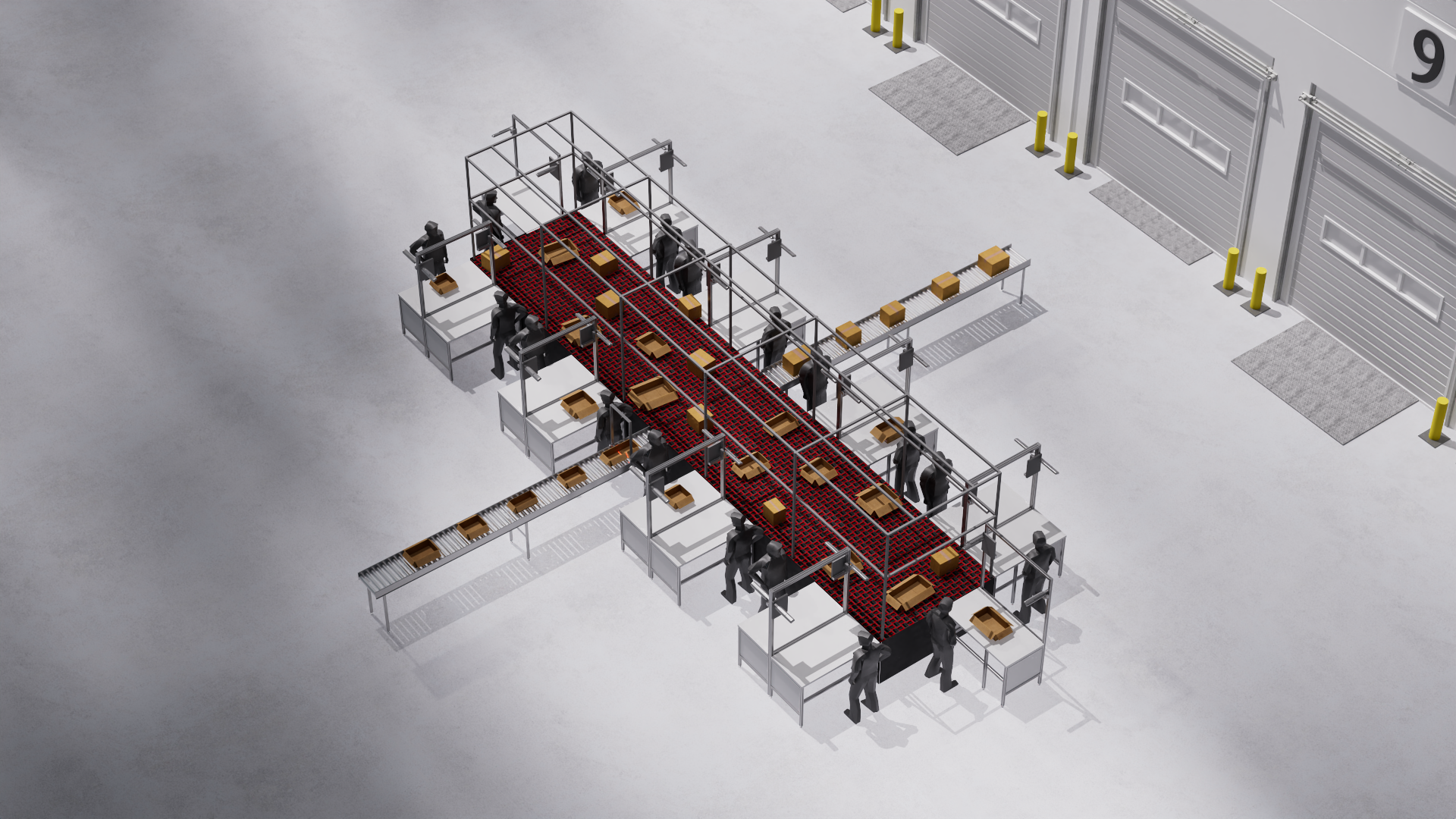
Eliminates intake friction
Orders are released from storage straight onto the surface, manually or automatically through conveyors, which allows for seamless, controlled entry
Keeps stations active
Packages buffered to balance flow and keep work moving
Routes intelligently
Packages sent to the right station for the right value-added handling
Presents for value-added handling
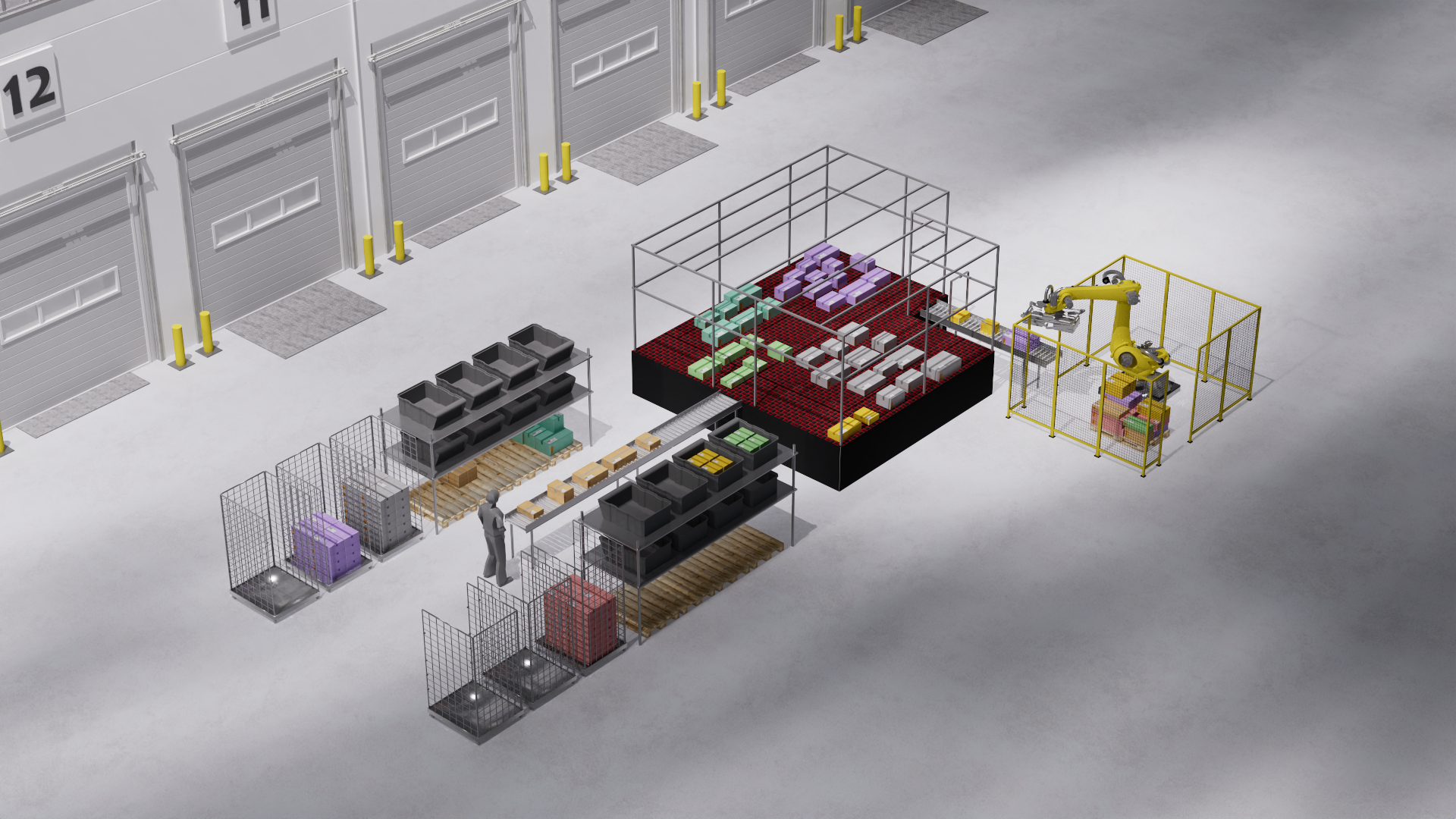
Packages ready to process – no timing or extra handling needed, and optionally combined with manual picking shelves and AMRs
Returns automatically and flows onward
Place and forget – focus solely onthe next inspection, and the package flows smoothly to the next step for further manual or automated handling
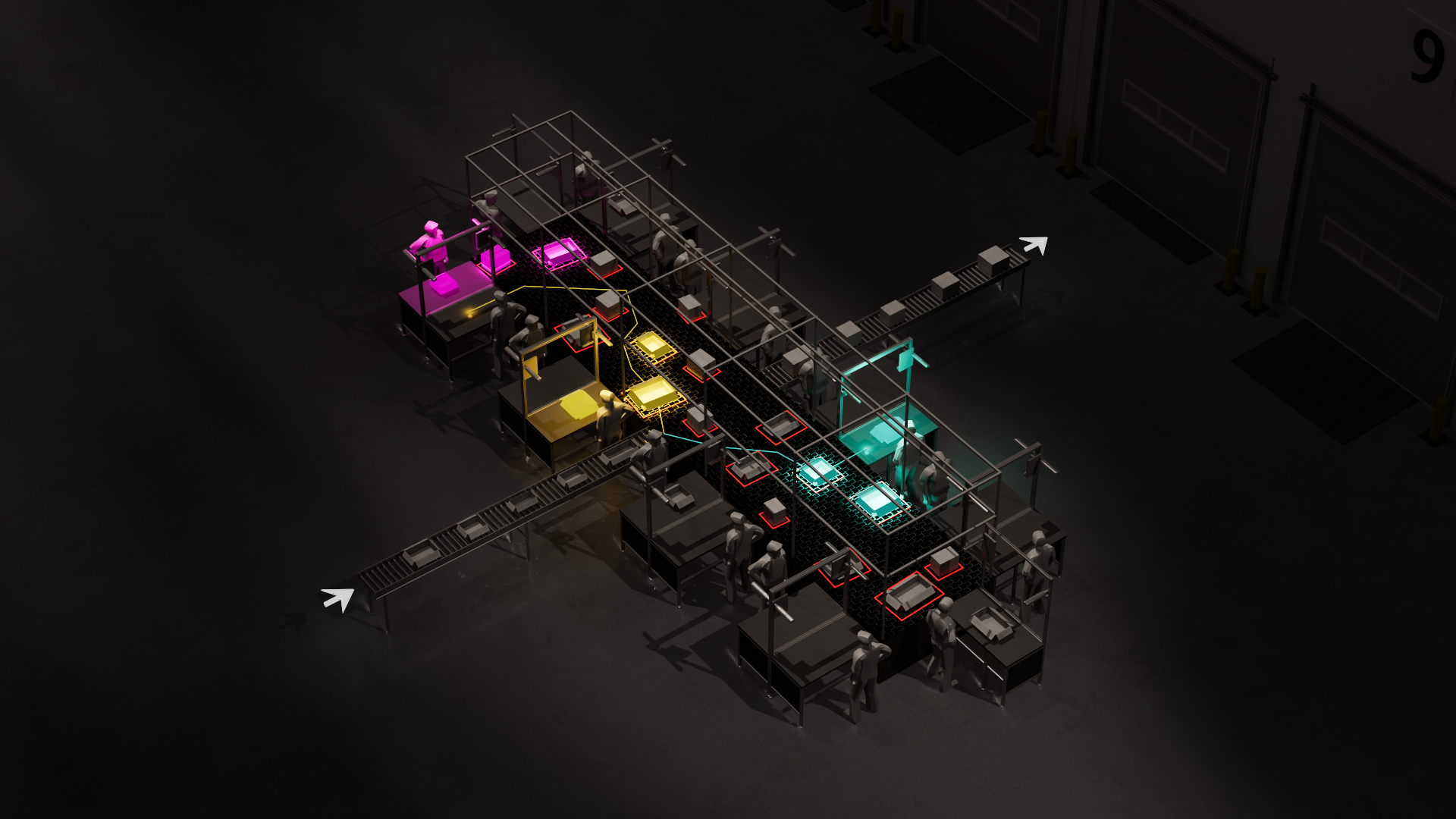
AI-driven intelligence sees, understands and controls every item individually
Each item's route is decided individually and autonomously re-decided in real time
Outperforming rigid automation and manual systems where it matters
Upgrading your flow logic with software-defined autonomous goods-to-person for workstation handling
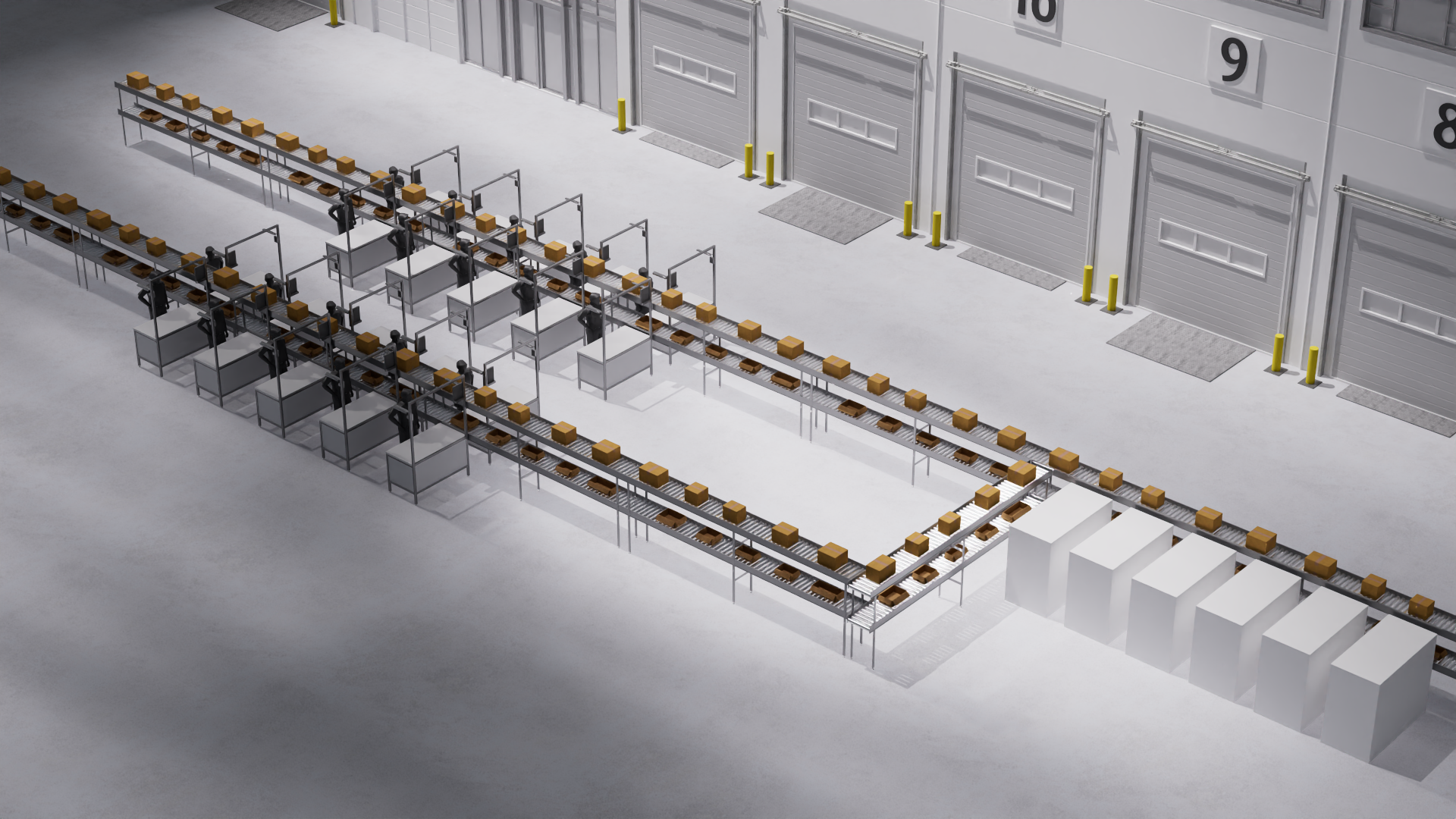
Each function needs its own stage, and the layout decides the flow.
Every parcel is controlled individually on a multi-capable, minimal-footprint surface.
More touches per parcel, and error probability rises with every touch.
Autonomous grouping, buffering, sequencing and exception handling reduce errors and touches per parcel.
Manning is required at both ends, and changing the flow means changing the hardware.
Adapting to changing flow demands requires only a software update, and buffer capacity scales by adding modules.
Start small and grow without rebuilding
Every phase is a complete, working system
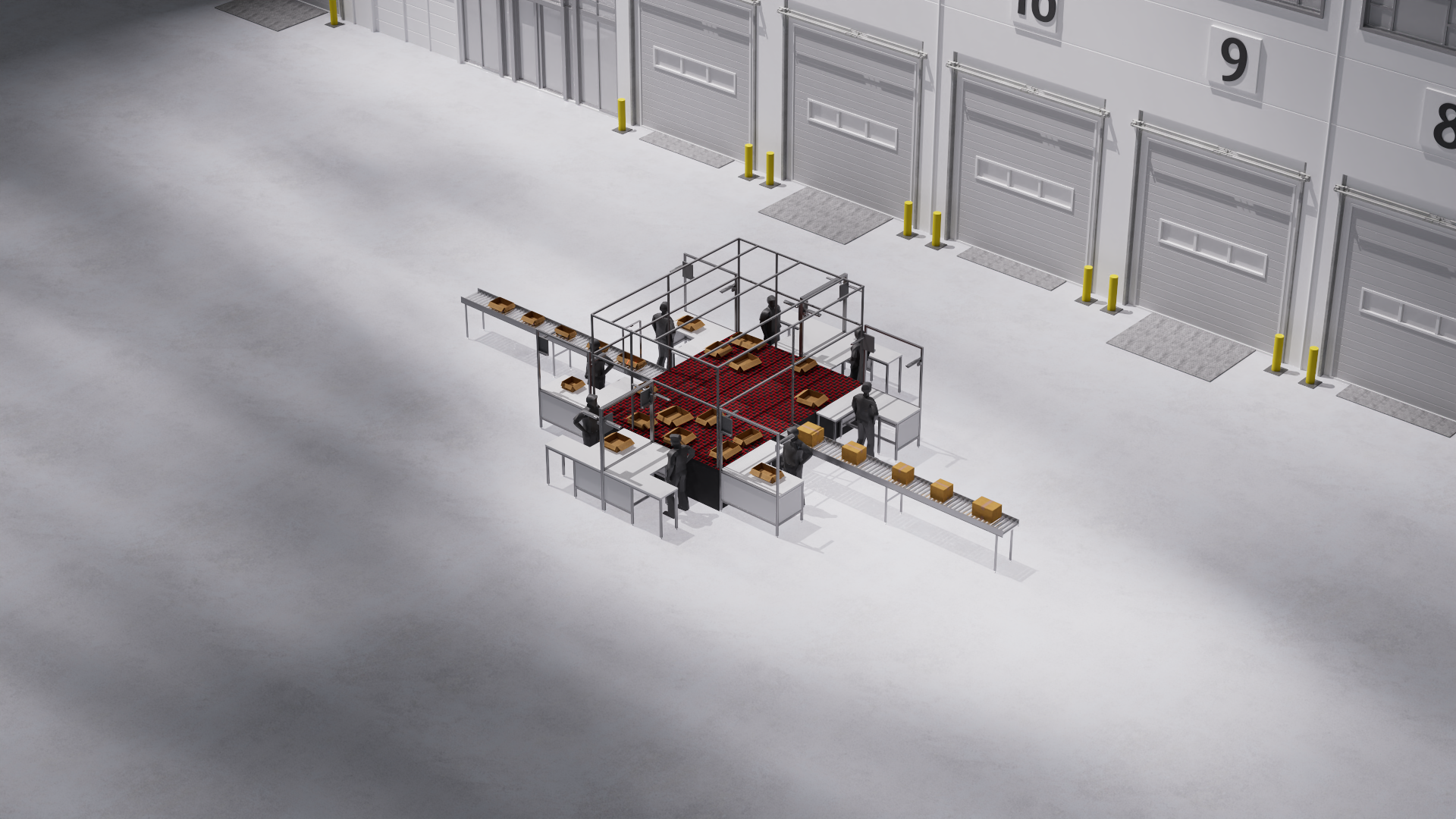
Start small
Start on a scale that fits the needs of today and near-term targets.
Expand the system as the business grows
Add more modules to increase total simultaneous handling capacity, optionally add more workstations and infeed/outfeed lines.
Any flow logic changes are just wireless software upgrades available in any phase.
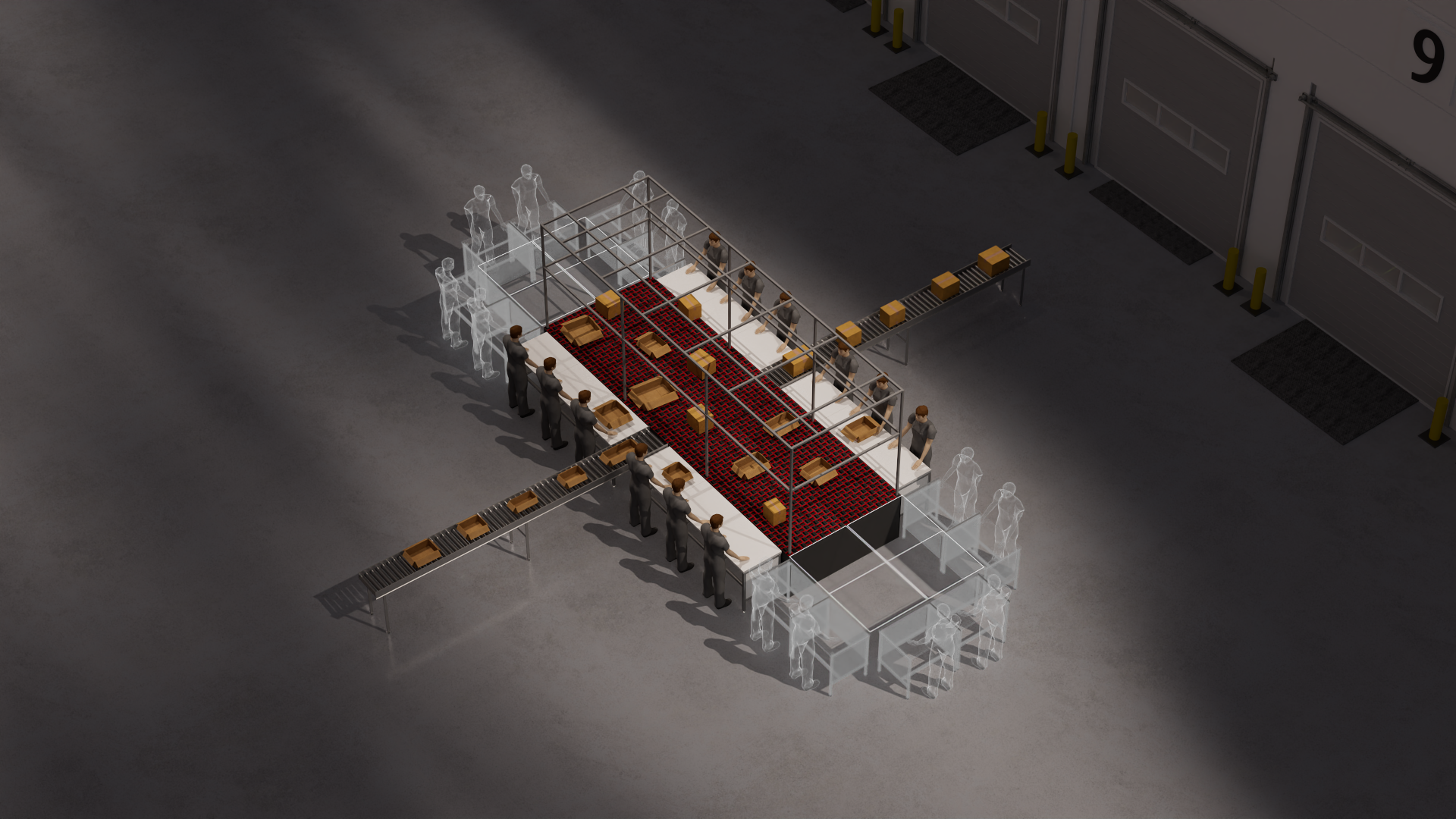
Seamlessly grow and change flow logic
Continue adding modules to increase capacity, together with workstations and infeed/outfeed lines.
What buyers ask us first
We move a wide variety of goods, from cartons to polybags.
Flow simulations, tests, and a digital twin validate every flow requirement before a single module is shipped.
We provide swift integration with partner systems (WMS, WCS, robot controller etc.) which unlocks value realization from day one.
Hardware arrives pre-assembled with software already tested in simulation, which makes commissioning straightforward and predictable. It's ready for go-live in weeks, not months.
OmniMod products ship as-is with a standard capability configuration. Adding capabilities and changing flow rules are only a wireless software update, not hardware rebuilds.
Ready to move with future-proof intelligence?
Tell us about your material flow and the goods mix that has to move in it
