
Cross-docking depends on precise coordination of timing, quantity and destination
Goods arrive, get matched to an outbound transport, and leave again — ideally without ever being stored.
A well-working cross-docking operation cuts costs, reduces handling and accelerates delivery but only works when every parcel meets its outbound transport in time.
Cross-docking works until the schedule slips
When coordination breaks down it creates expensive bottlenecks, and often relies on manual clean-up work to keep operations running.
A truck runs late, and the rest of the day re-plans itself
The same goods get handled again, and again, before they leave the building
Absorbing a busy week means more people, or more floor, and it's usually both
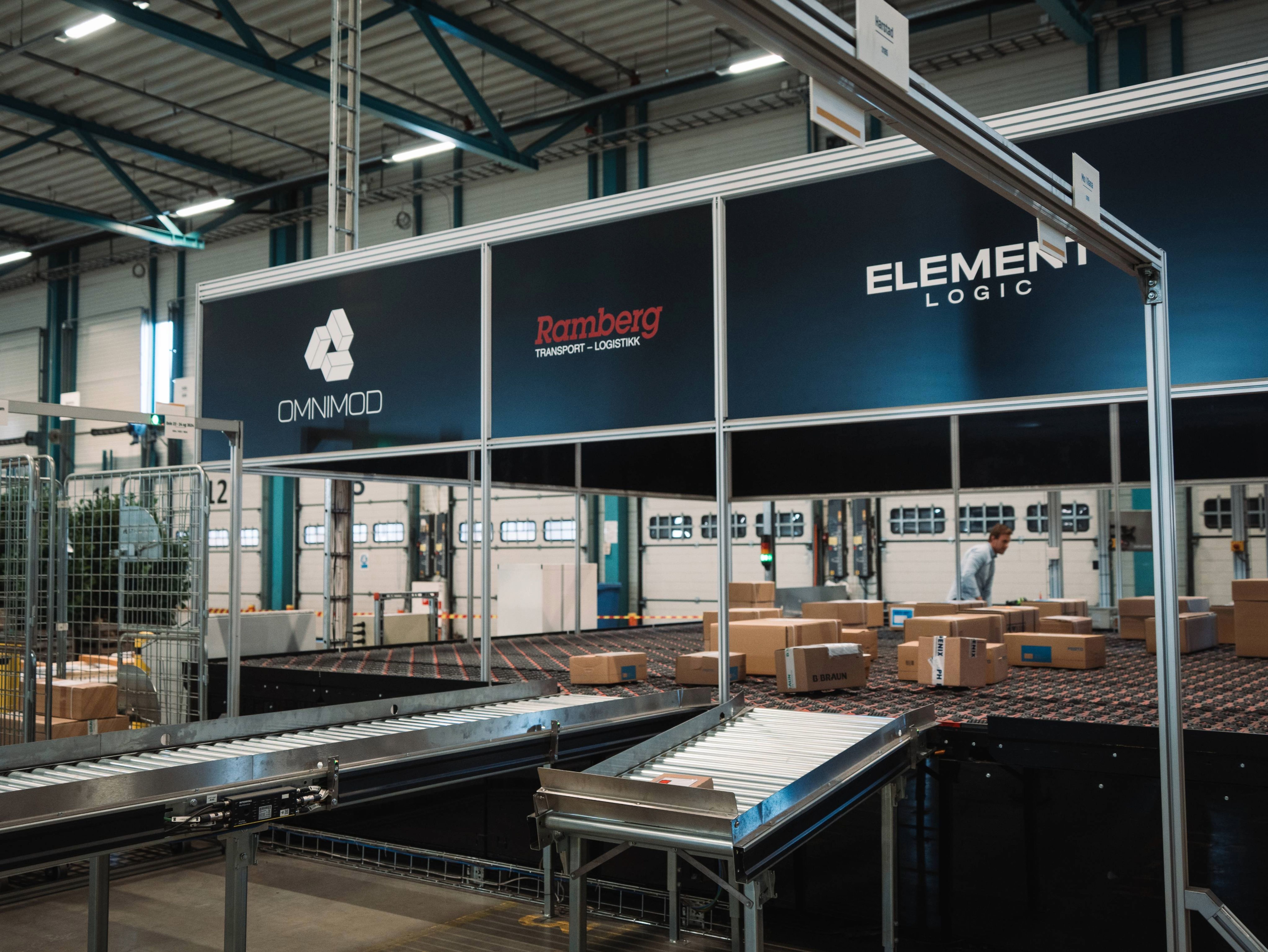
Autonomous 3PL cross-docking at B.H. Ramberg
A 5×5 m system that fit a space-constrained site
OmniMod is very advantageous for us. It handles goods more efficiently, but most importantly it increases our quality. This strengthens Ramberg's competitive edge and ensures a better customer experience.
Roar Ødelien, CEO B.H. Ramberg
How autonomous cross-docking changes your operations
Every parcel is accounted for
Tracked individually throughout the whole flow, and the image database of every parcel ensures complete traceability.
Peaks absorbed without extra people
The buffer takes the surge and arrival variance. Operators move from routine handling to oversight and exceptions.
One surface does the work of four stages
Buffering, grouping and sequencing share one footprint, with no need for aisles, staging areas or extra clearances around manual movement.
The flow changes without the floor changing
New goods mix, new destinations, new business logic — all go live through software updates. Capacity grows by adding modules, not by rebuilding.
How it works
From the unloading point to the outbound lane, without manual handling in between.
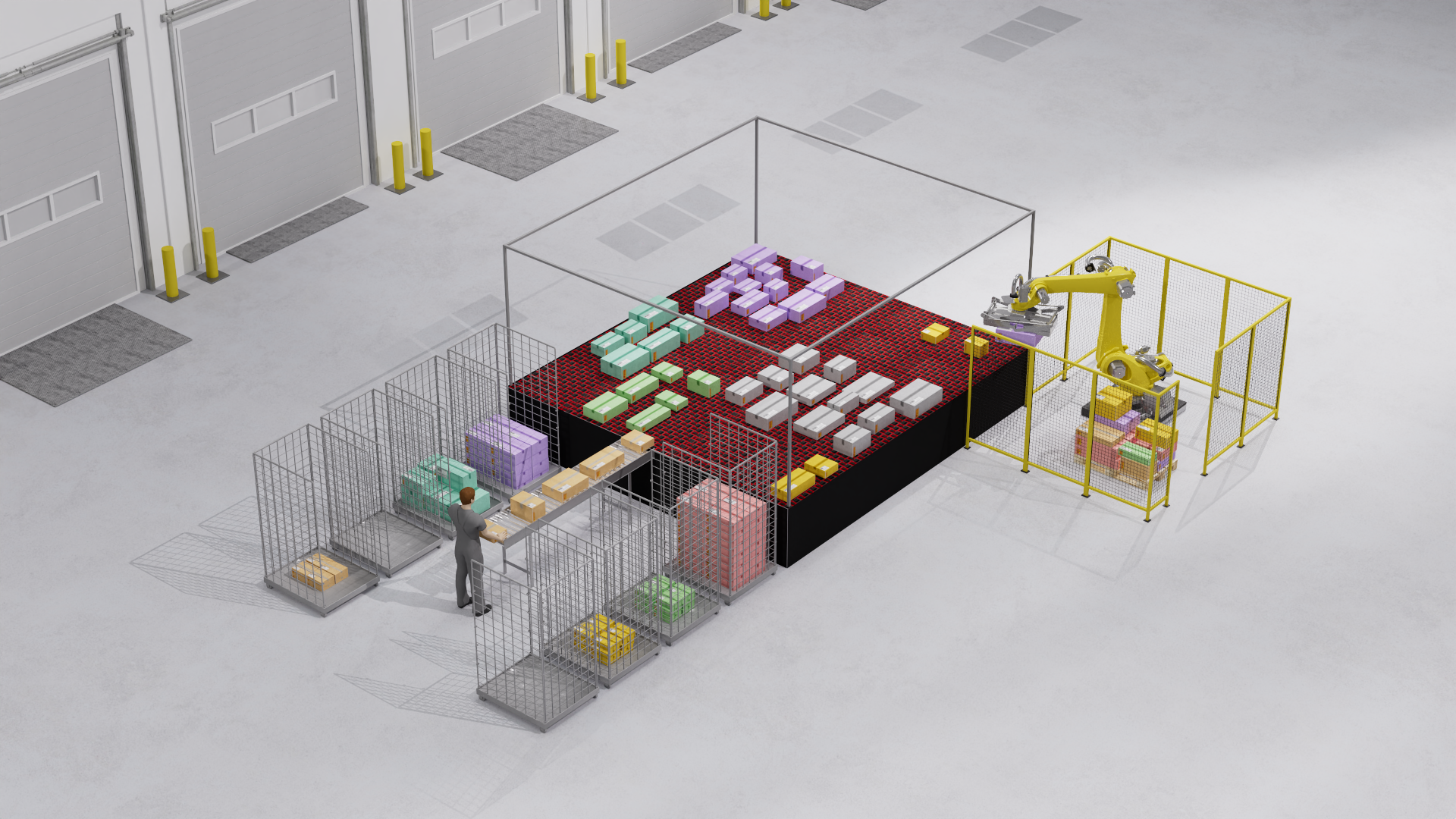
Eliminates intake friction
Seamless, controlled entry (manual or automated)
Observes and tracks individual parcels in real-time
Full visibility enables individual goods traceability
Autonomously handles asynchronous inbound and outbound
Intelligent parcel grouping and dynamic buffering handles complex decision-making
Intelligently synchronizes buffer release with transport timing
Outfeed triggered by time or external signal, and groups dispatch together, optionally sequenced order for optimized handling further downstream
Automation-ready outfeed
Compatible with direct-to-cage drop, robot arm hand-off, conveyor transfer, or manual handling
AI-driven intelligence sees, understands and controls every item individually
Each item's route is decided individually and autonomously re-decided in real time
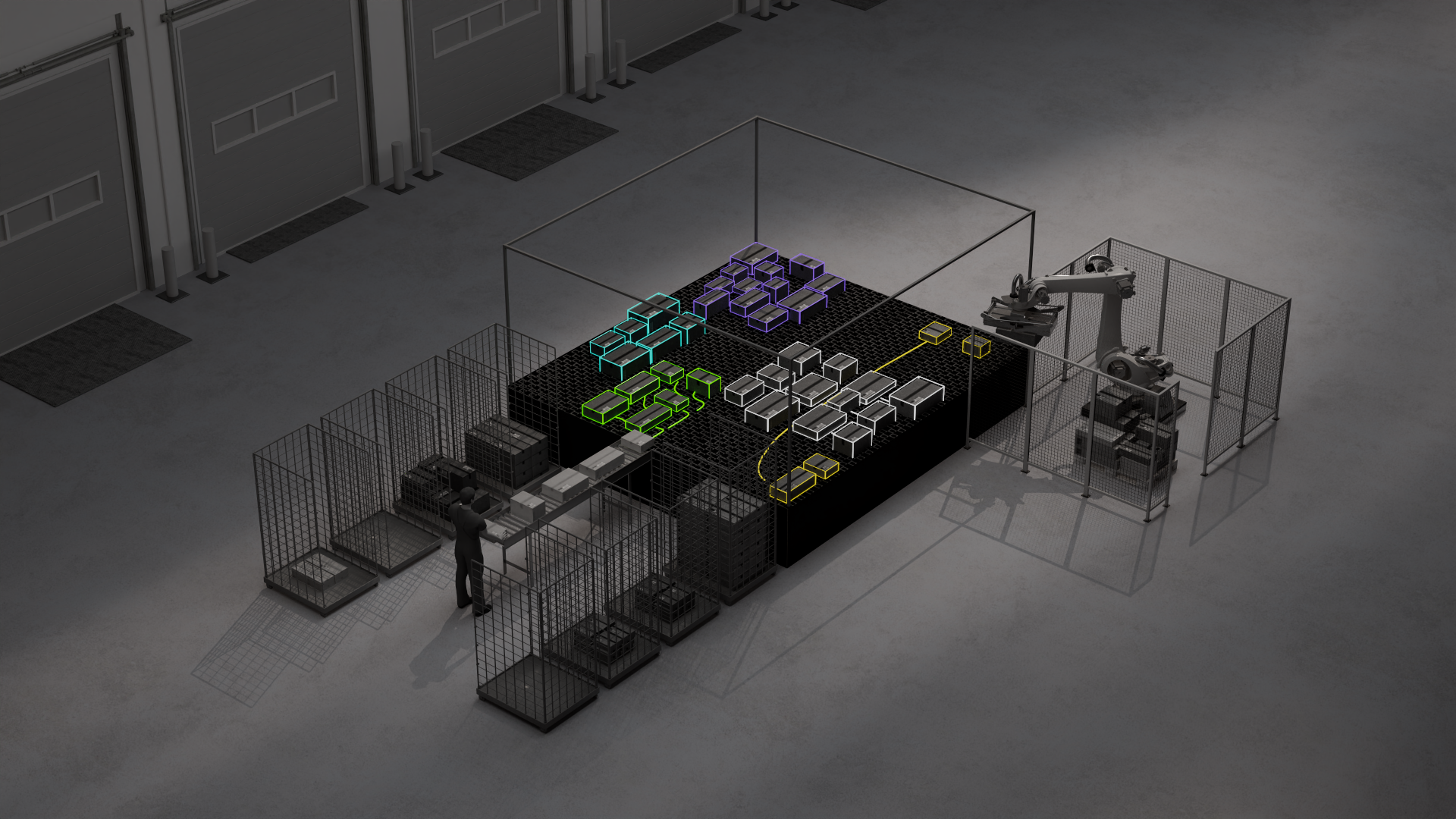
Outperforming rigid automation and manual systems where it matters
Upgrading your flow logic with software-defined autonomous cross-docking
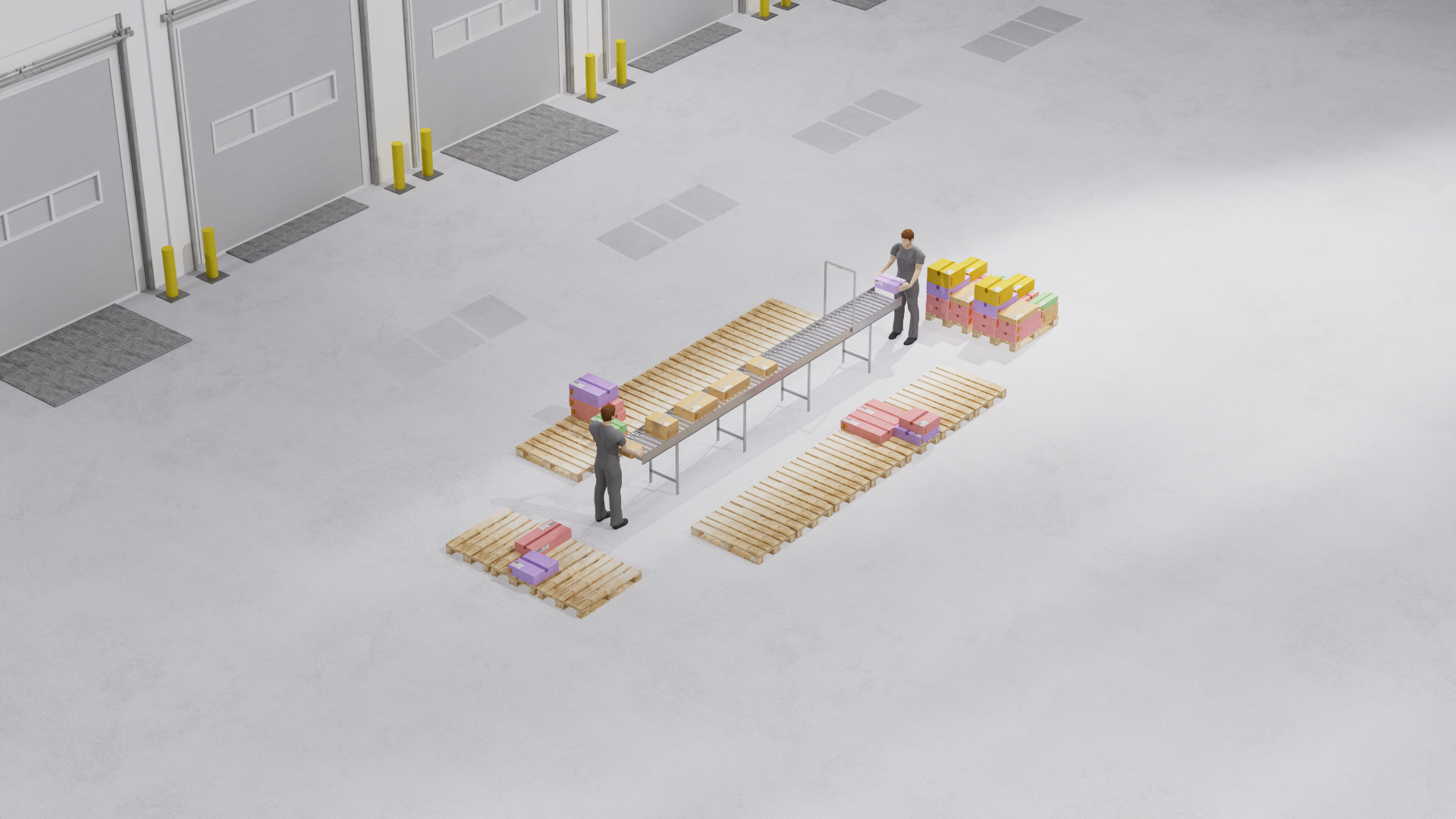
Each function needs its own stage, and the layout decides the flow.
Every parcel is controlled individually on a multi-capable, minimal-footprint surface.
More touches per parcel, and error probability rises with every touch.
Autonomous grouping, buffering, sequencing and exception handling reduce errors and touches per parcel.
Manning is required at both ends, and changing the flow means changing the hardware.
Adapting to changing flow demands requires only a software update, and buffer capacity scales by adding modules.
Start small and grow without rebuilding
Every phase is a complete, working system
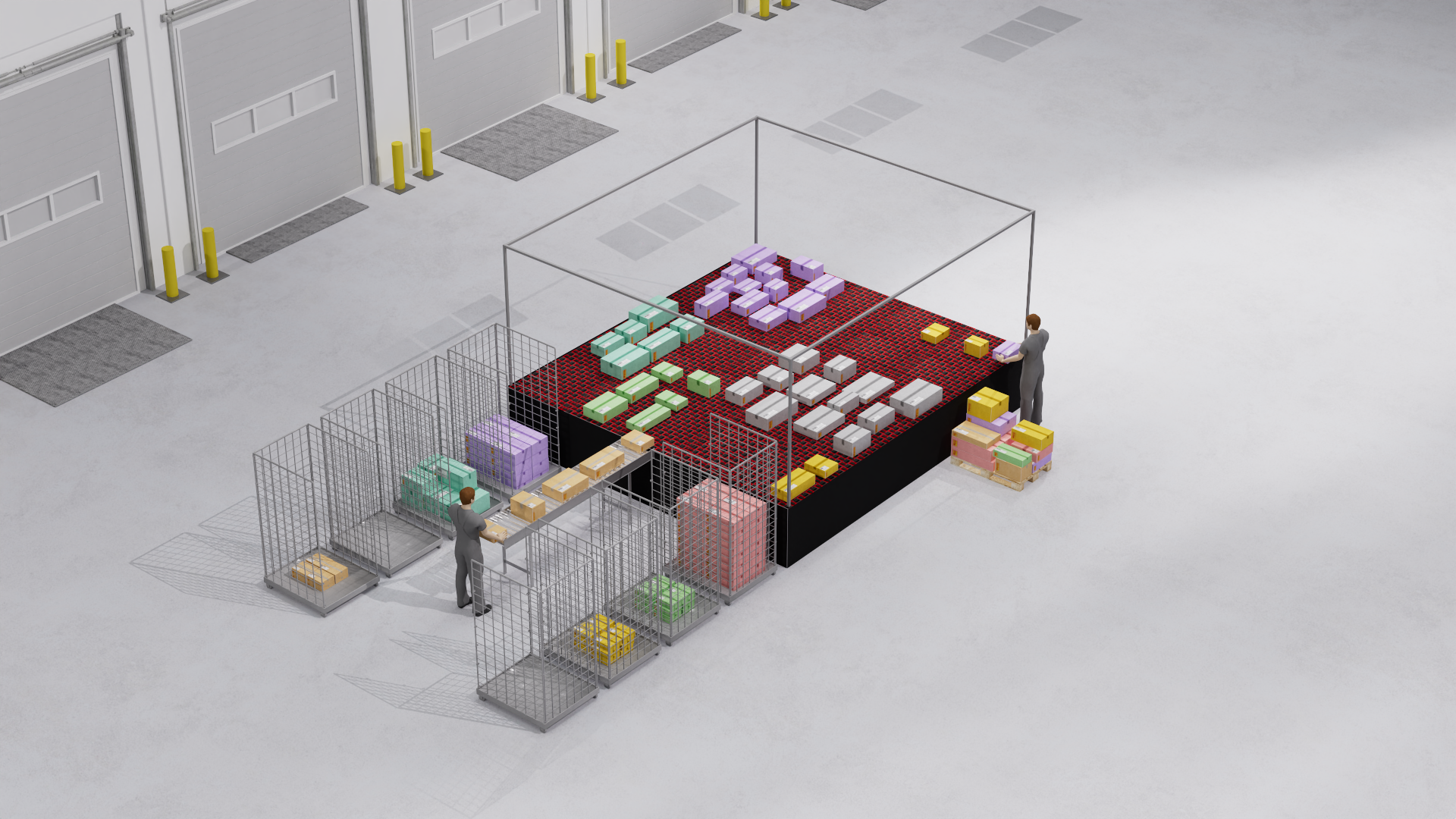
Start small
Run both infeed and hand-off from outfeed manually, but now on a minimal footprint and with reduced FTE needs
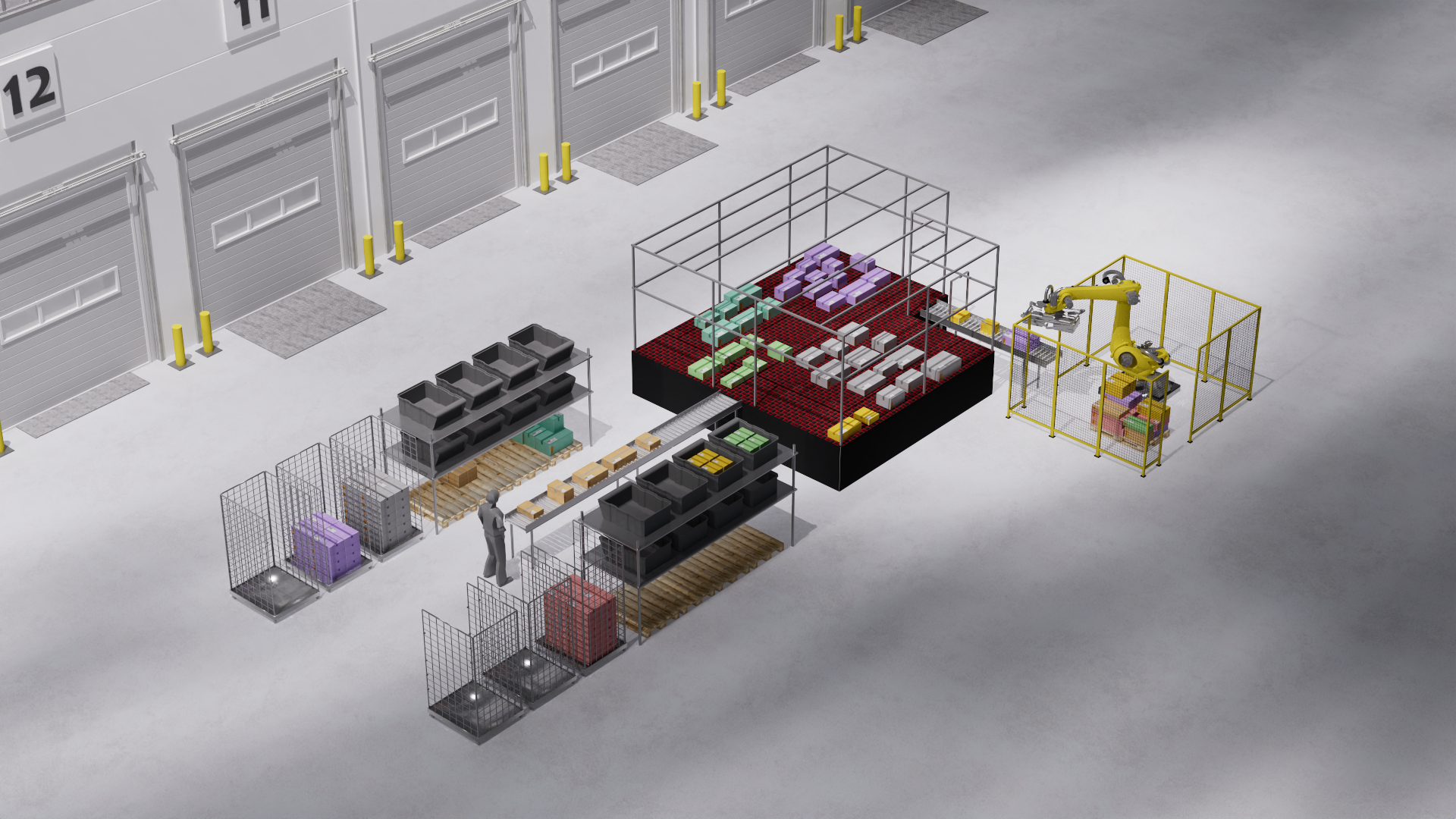
Automate the infeed
Upgrade operations with the same footprint but infeed automated by a robot
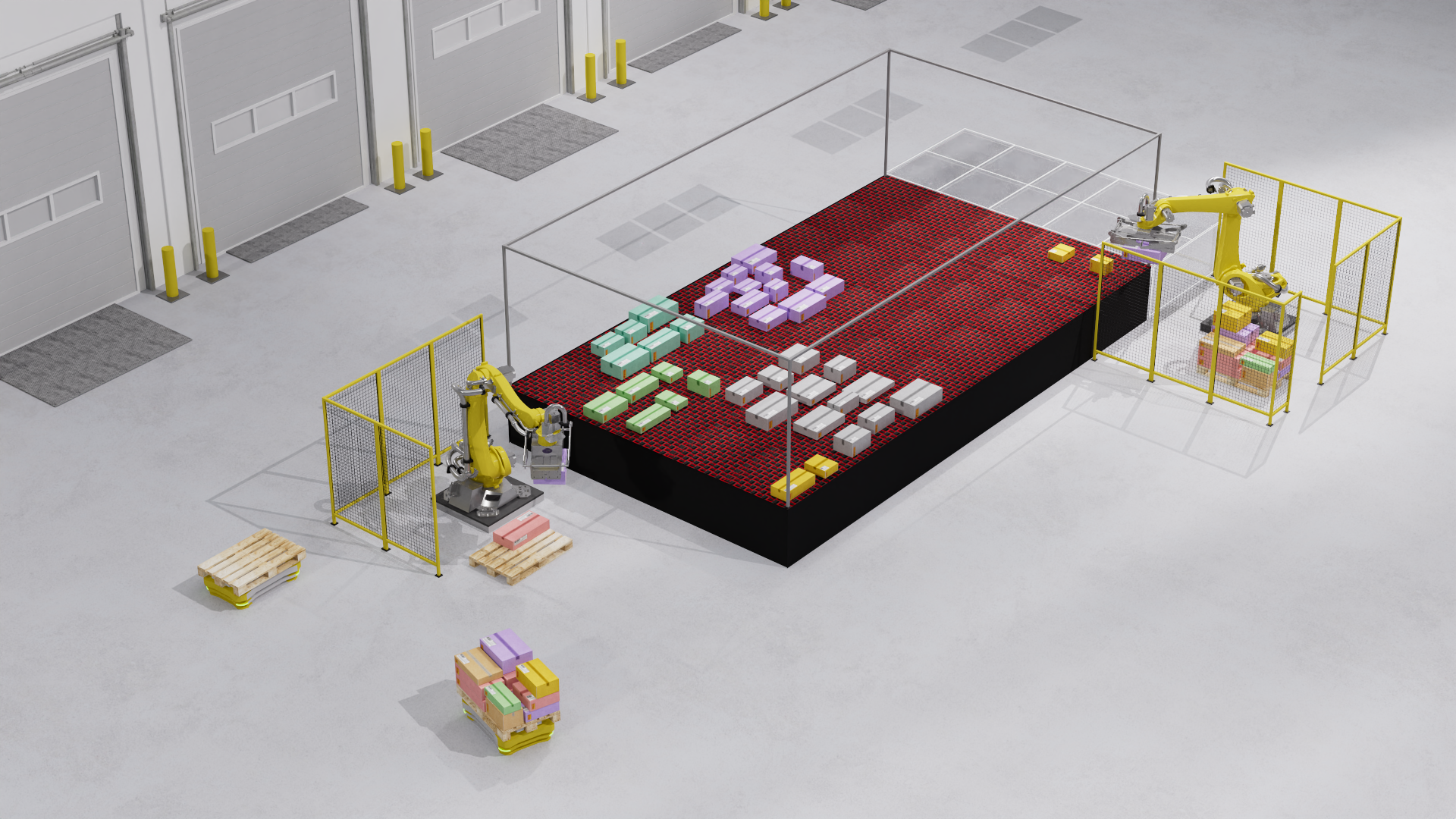
Grow the buffer
Add modules for capacity, and hand off to robots at both both ends for a fully autonomous operation
What buyers ask us first
We move a wide variety of goods, from cartons to polybags.
Flow simulations, tests, and a digital twin validate every flow requirement before a single module is shipped.
We provide swift integration with partner systems (WMS, WCS, robot controller etc.) which unlocks value realization from day one.
Hardware arrives pre-assembled with software already tested in simulation, which makes commissioning straightforward and predictable. It's ready for go-live in weeks, not months.
OmniMod products ship as-is with a standard capability configuration. Adding capabilities and changing flow rules are only a wireless software update, not hardware rebuilds.
Ready to move with future-proof intelligence?
Tell us about your material flow and the goods mix that has to move in it
