
Pallets must be be dense enough to ship economically and stable enough to survive the journey
Goods arrive in streams generated from order picking, get placed in the order the pallet needs, and then the pallet flows onwards.
A well-built mixed-case pallet lowers transport costs, protects the goods and speeds up dispatch, but only works when every item reaches the robot in the exact and most optimal order the build requires.
Rigid goods sequencing for pallet building breaks when needs change and exceptions occur
Achieving it used to require multi-stage systems, heavy manual effort, and workflows that break the moment the goods mix changes or additional constraints are introduced
Items arrive in the order the conveyor allows, not the order the pallet needs
A new goods type in the mix, and the hardware decides whether it is viable
One failed pick, a cell going down or an issue along the line can halt the whole operation
How autonomous, sequenced palletizing changes your operations
Every parcel is accounted for
Tracked individually throughout the whole flow, and the image database of every parcel ensures complete traceability.
The robot never waits for the next case
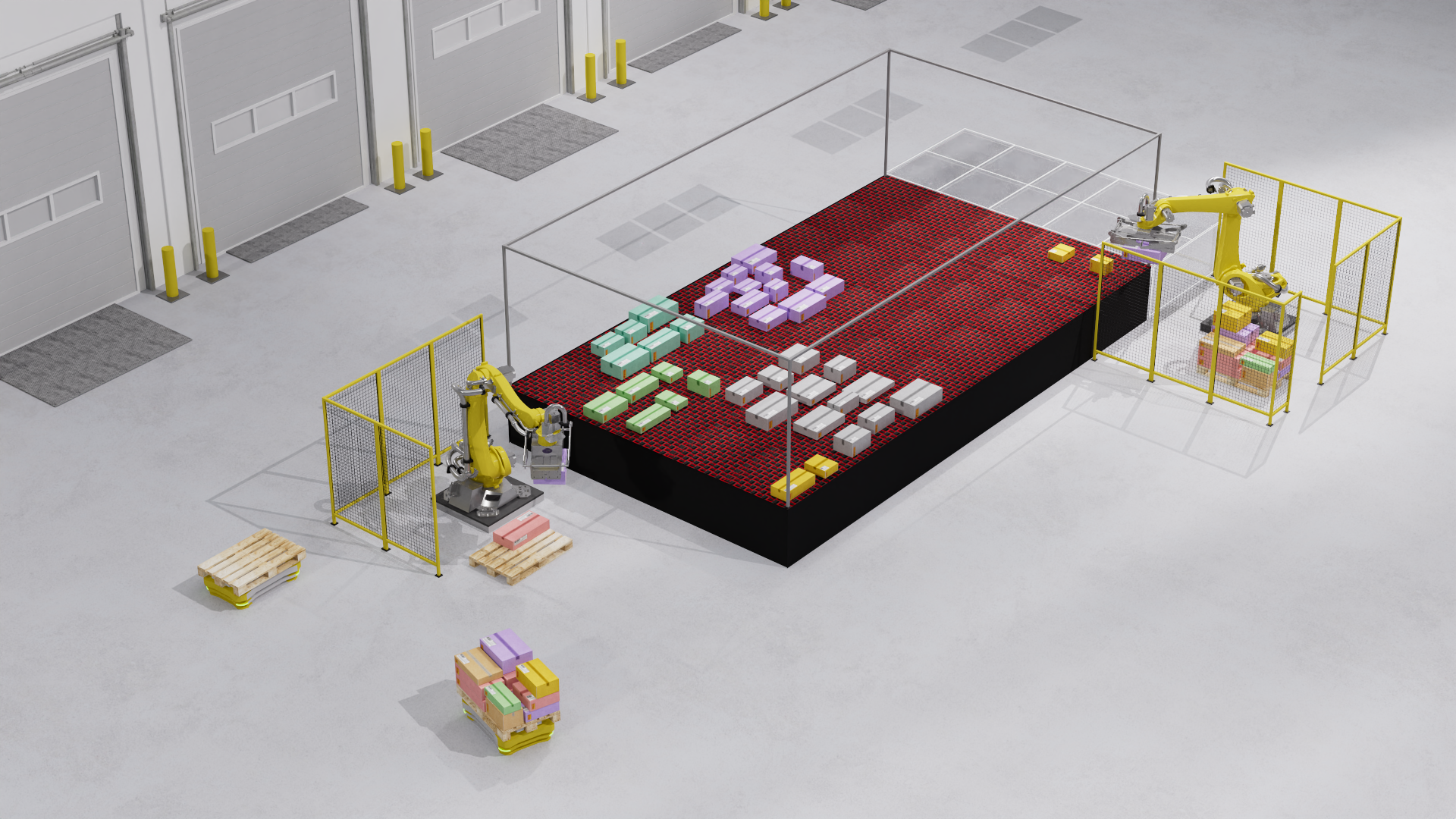
Goods are held on the surface and released in build order, so the cell runs at its own rate instead of the rate the upstream flow happens to deliver.
The build order resolves before the cell, not inside it
Buffering, sequencing and orientation happen on one compact surface rather than across sorter loops and dedicated conveyor stages.
The flow changes without the floor changing
New goods mix, new destinations, new business logic — all go live through software updates. Capacity grows by adding modules, not by rebuilding.
How it works
From the unloading point to the outbound lane, without manual handling in between.
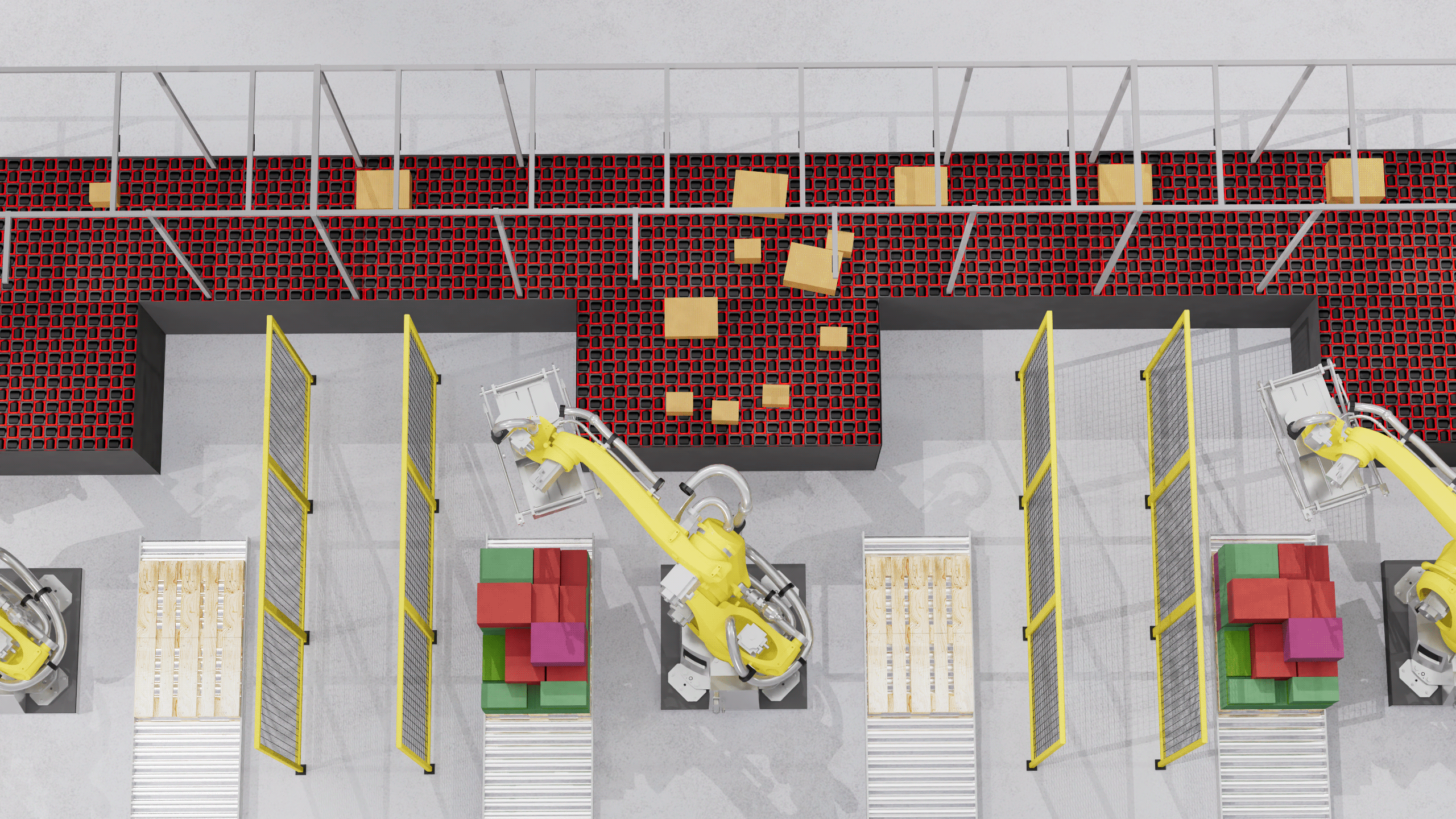
Eliminates intake friction
Seamless, controlled entry (manual or automated)
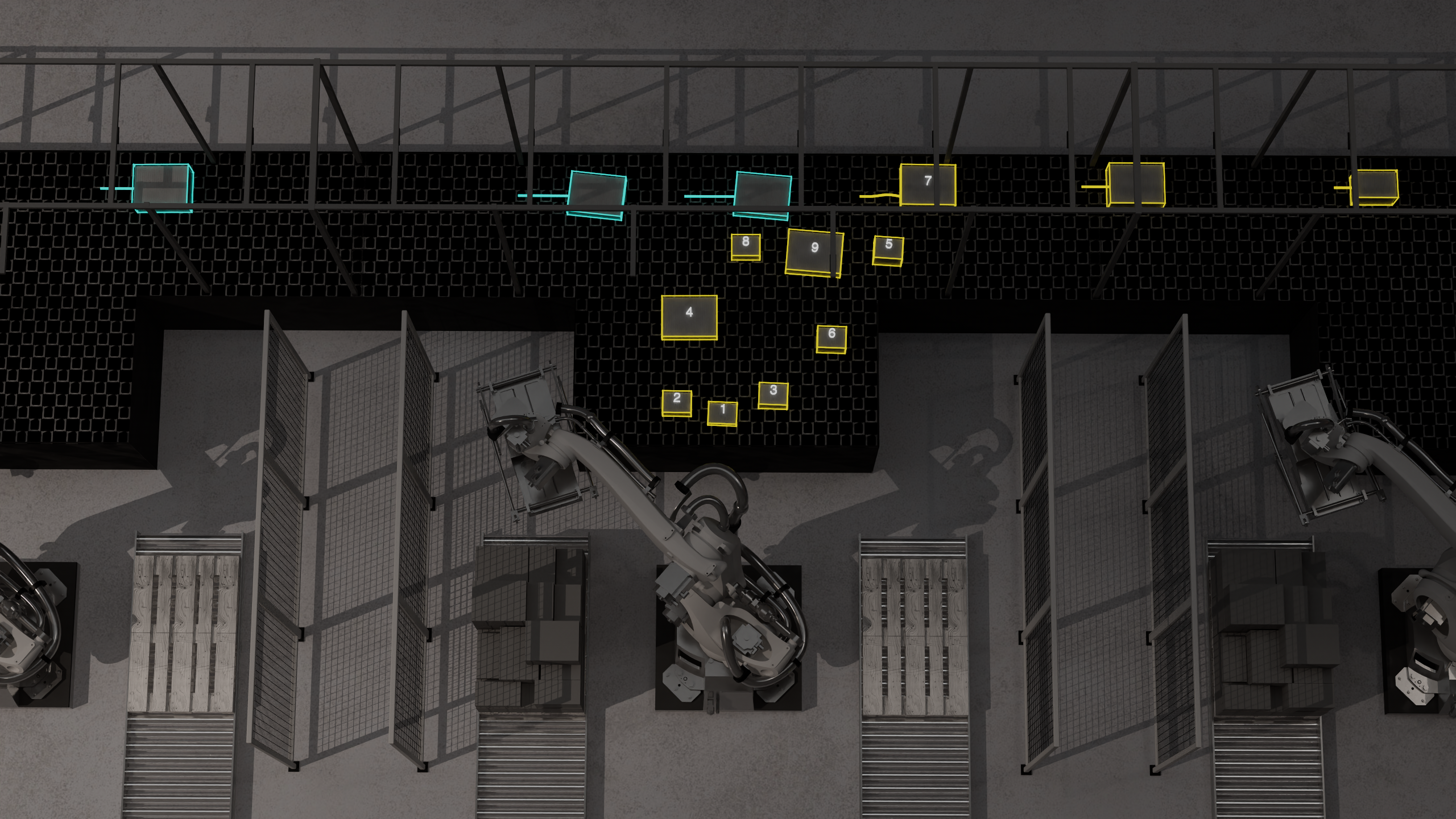
Observes and tracks individual goods in real-time
Full visibility enables individual goods traceability
Dynamically buffers before presenting to robot
Goods are held and queued based on palletizing logic
Intelligently re-sequences "on-the-fly"
Goods are presented to the palletizing robot in the optimal pick order for the pallet building, with or without pre-shared DWS data
Presents with precision and flows onward
Exact positioning and customizable orientation at the pick point enables the robot to build dense, stable pallets, and then the finished pallet continues downstream without interruption
AI-driven intelligence sees, understands and controls every item individually
Each item's route is decided individually and autonomously re-decided in real time
Outperforming rigid automation and manual systems where it matters
Upgrading your flow logic with software-defined autonomous palletizing
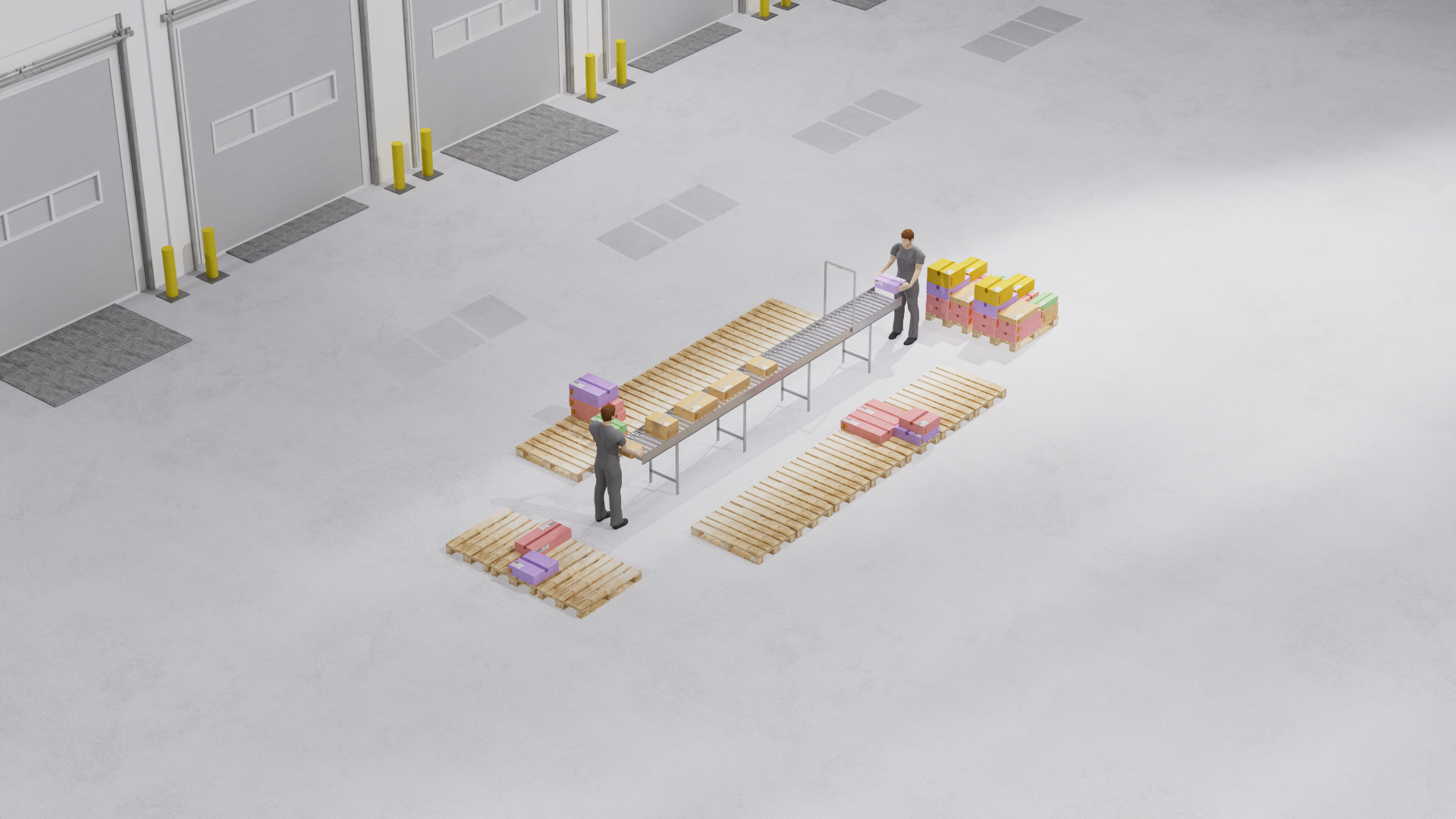
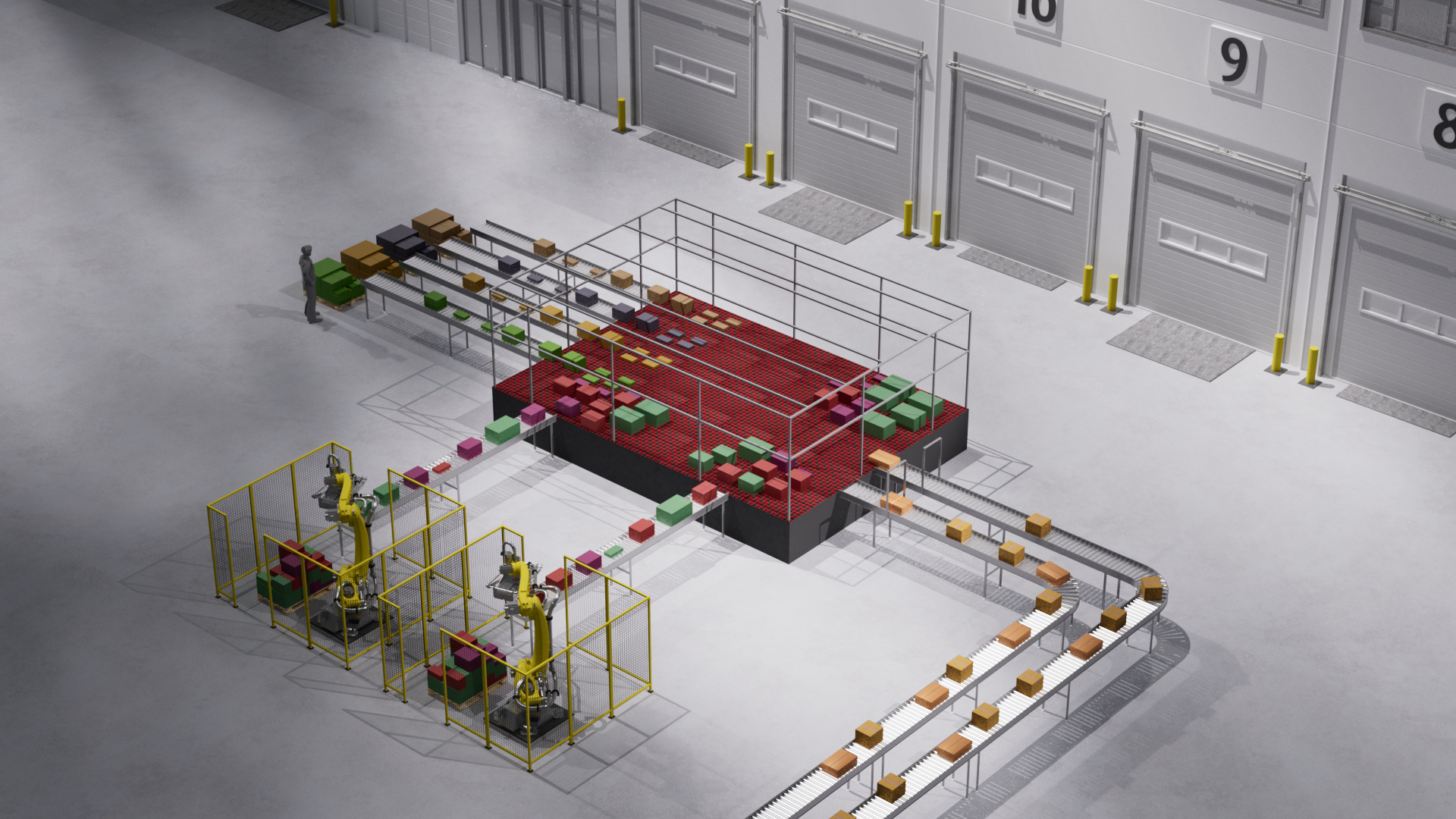
Each function needs its own stage, and the layout decides the flow.
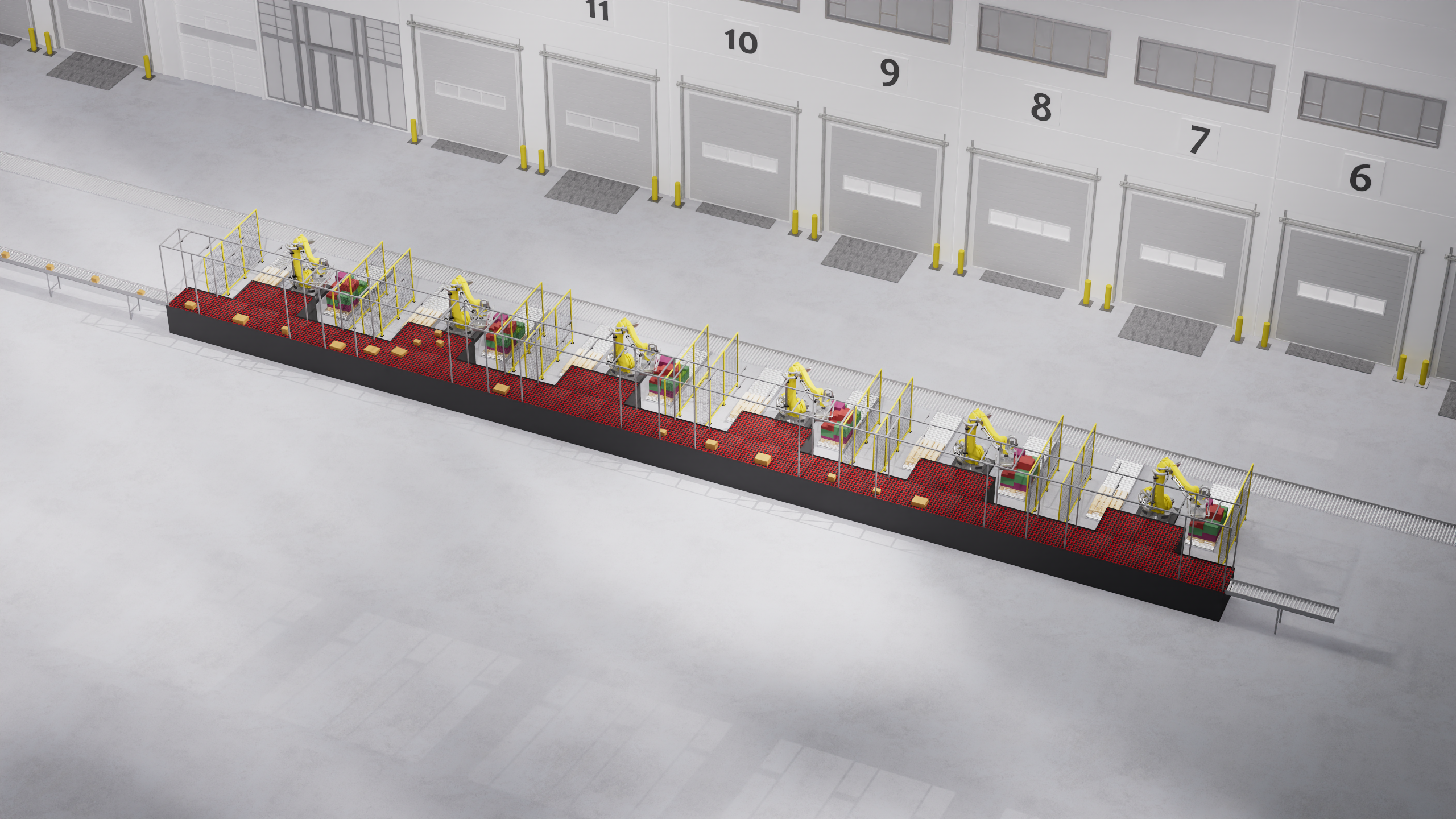
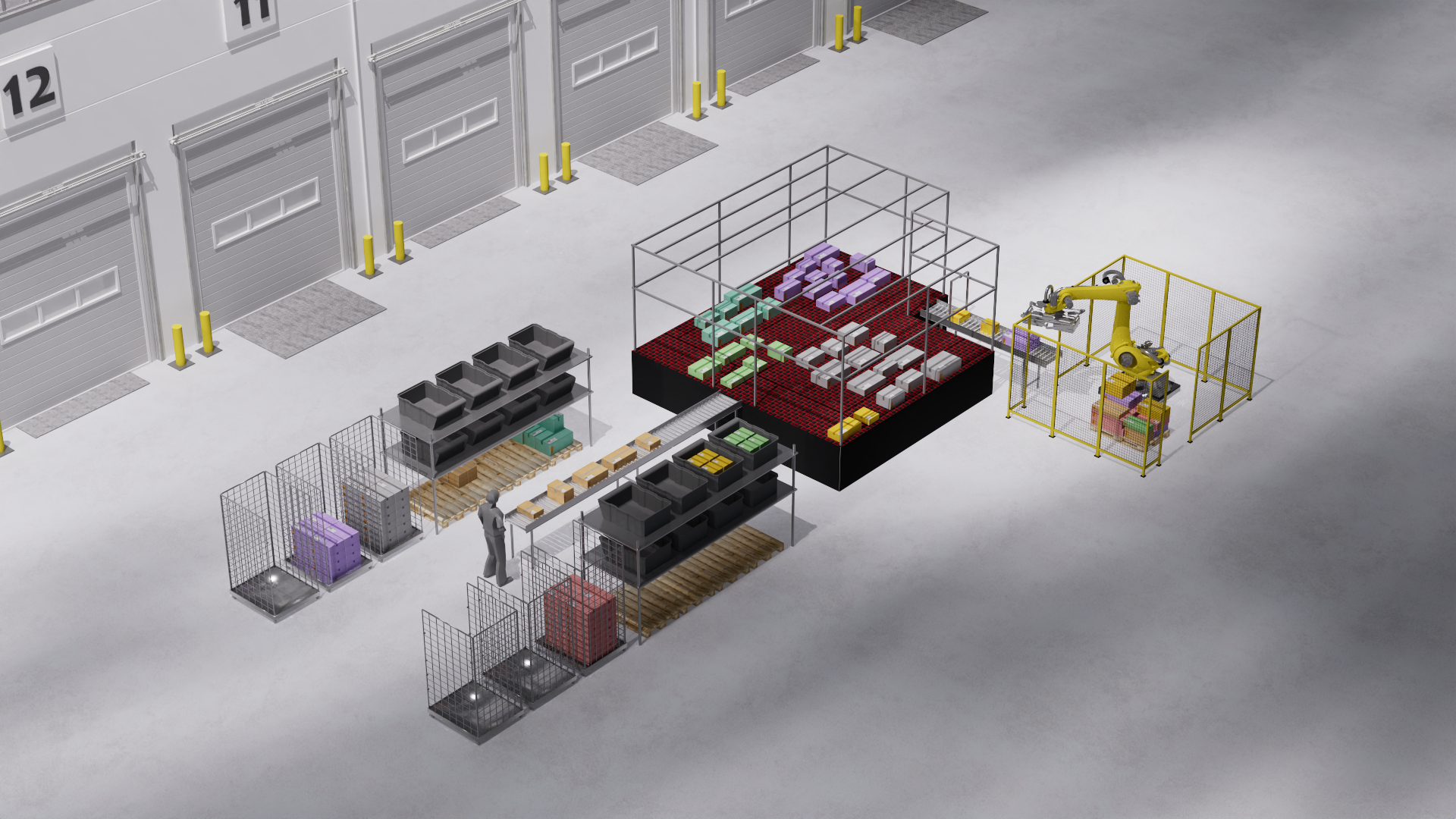
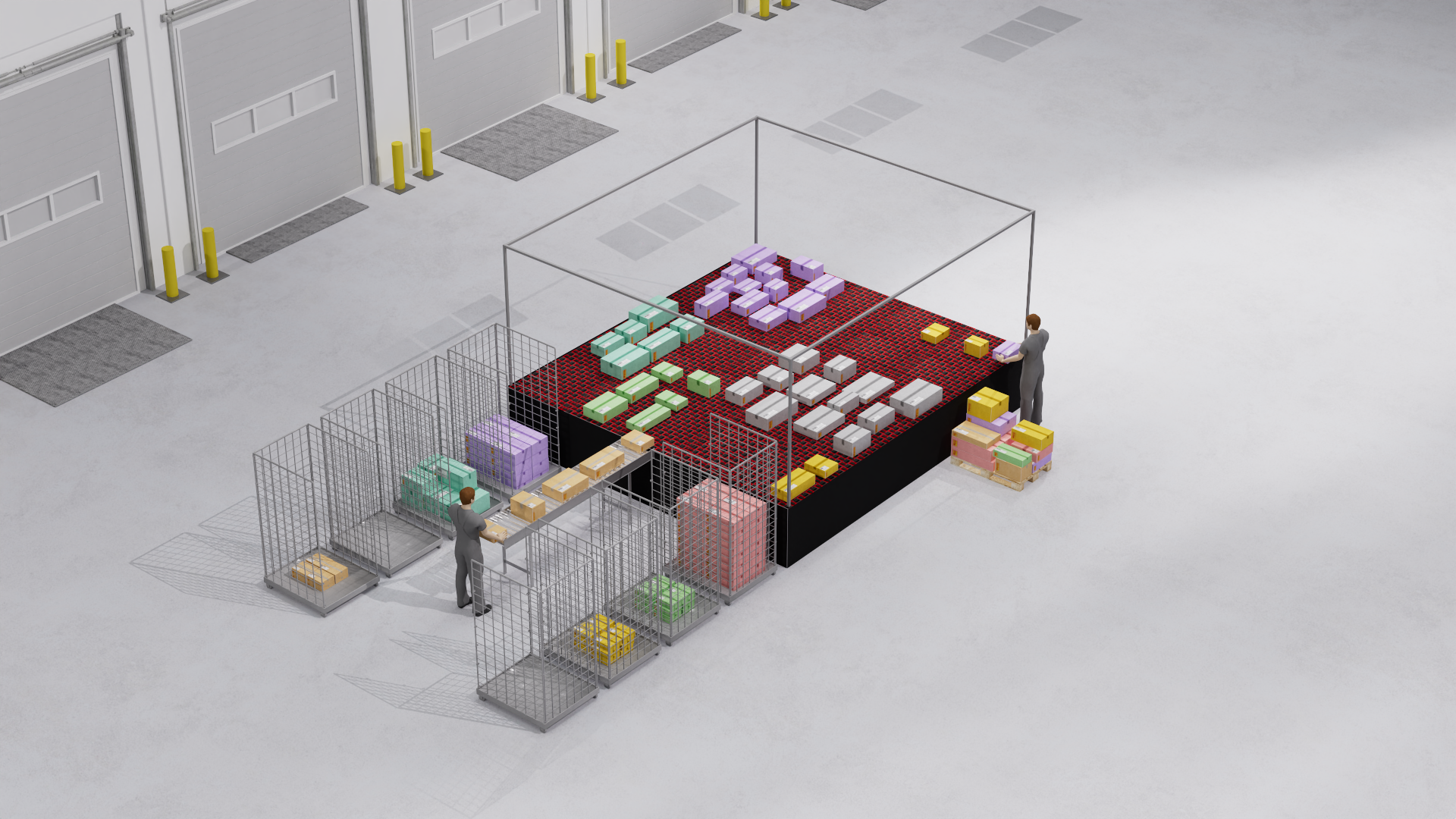
Every parcel is controlled individually on a multi-capable, minimal-footprint surface.
More touches per parcel, and error probability rises with every touch.
Autonomous grouping, buffering, sequencing and exception handling reduce errors and touches per parcel.
Manning is required at both ends, and changing the flow means changing the hardware.
Adapting to changing flow demands requires only a software update, and buffer capacity scales by adding modules.
The perfect fit for greenfield and brownfield alike
Start with the system that fits today, and let it grow with your business.
Each phase is a complete, proven deployment, not a steppingstone.
A right-sized system
Start with turning one flow autonomous with a minimal-footprint system
New flow modes, zero new hardware
New functionality, such as changed sorting and sequencing logic or flow-specific routing added through a wireless software update and multiple flow modes run on the same system.
Optionally add more modules to increase simultaneous handling capacity.
Add modules, infeed/outfeed lines and AI-driven functionality as volumes grow
Optionally integrate with other automated solutions, such as robots.
What buyers ask us first
We move a wide variety of goods, from cartons to polybags.
Flow simulations, tests, and a digital twin validate every flow requirement before a single module is shipped.
We provide swift integration with partner systems (WMS, WCS, robot controller etc.) which unlocks value realization from day one.
Hardware arrives pre-assembled with software already tested in simulation, which makes commissioning straightforward and predictable. It's ready for go-live in weeks, not months.
OmniMod products ship as-is with a standard capability configuration. Adding capabilities and changing flow rules are only a wireless software update, not hardware rebuilds.
Ready to move with future-proof intelligence?
Tell us about your material flow and the goods mix that has to move in it
